

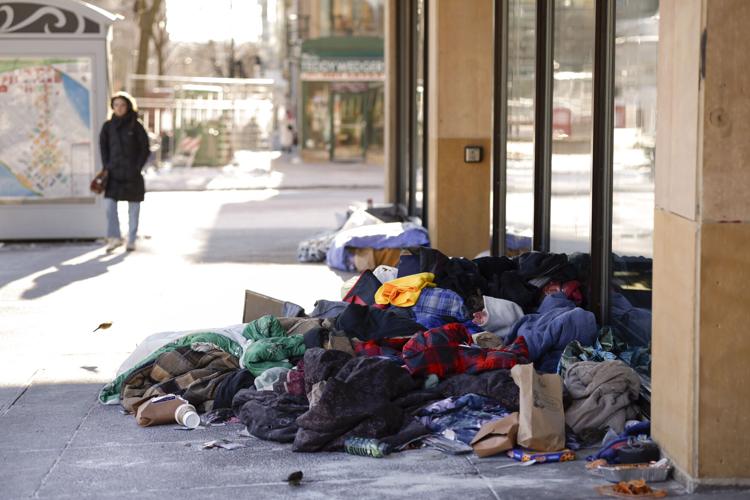
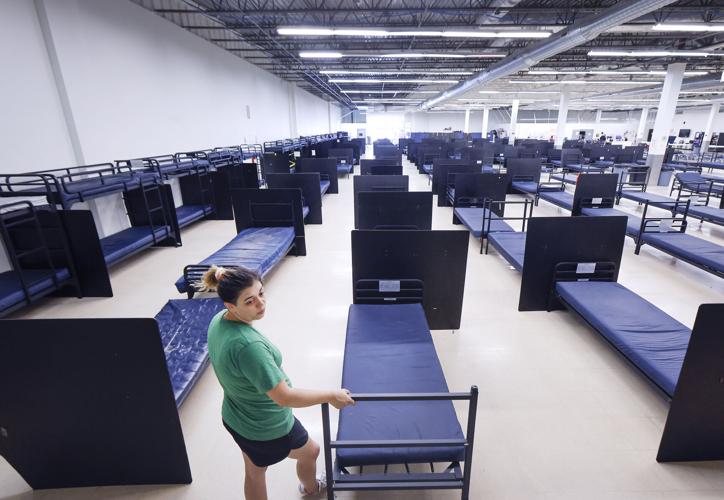
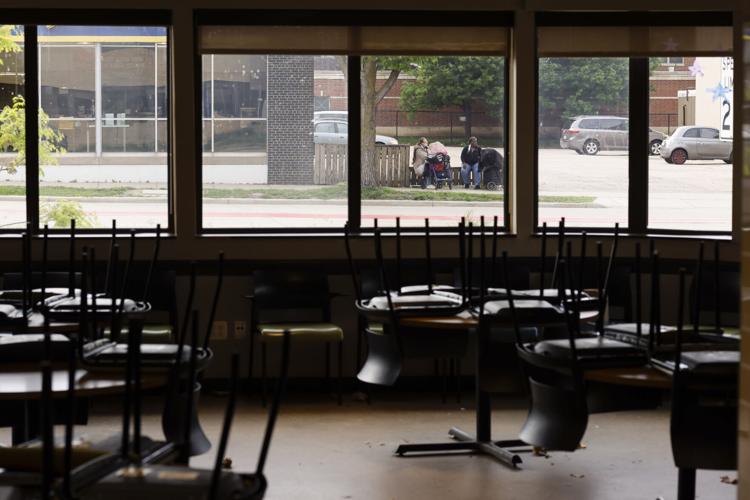

Months away from the anticipated opening of a new men’s homeless shelter on Madison’s east side, nonprofit organizations in Dane County are reporting record numbers of people needing help and a place to stay.
Local government officials are simultaneously worried about losing federal money that funds semi-permanent housing placements for people who lack a stable place to live. Dane County officials also fear losing other funding for housing projects because of new program standards that could curtail access to services such as substance abuse treatment.
The county could lose about $3 million in U.S. Department of Housing and Urban Development money this year because of a recent policy change that cuts 60% of the amount the county can spend on permanent housing, as opposed to temporary or rapid re-housing.
Torrie Kopp Mueller, the city and county’s Continuum of Care coordinator, has been following ongoing litigation against President Donald Trump’s administration since last fall.
Wisconsin, Illinois, Pennsylvania, California, New York, Minnesota and Michigan are among the states suing the administration and the federal housing department for “embracing policies that risk trapping people in poverty and punishing them for being poor,” the lawsuit says.
Trump’s initial executive budget proposal threatened to cut funding for permanent housing programs for older adults, people with disabilities and those with lower incomes by about half. Dane County receives about $6 million annually for housing programs, which include the entire network of resources that prioritize placing people in stable living conditions with access to social services.
The county’s Continuum of Care program, known as the Homeless Services Consortium, coordinates the distribution of federal housing funds in the community and maintains a compendium of resources for partners who work to prevent homelessness, including Porchlight Inc., Urban Triage, Madison Street Medicine, and The Salvation Army. Kopp Mueller anticipates some organizations will have to adjust programs based on federal directives.
For example, programs might have to eliminate services focused on gender or identity, or harm reduction, or they could face other requirements to participate in treatment or services. But Kopp Mueller said, those potential changes won’t be clear until the Department of Housing and Urban Development makes a funding announcement.
The department likely plans to prioritize funding for transitional housing and street outreach programs, she said, which can provide life-saving resources like access to shelter, winter apparel, food and blankets, but not the longer-term programs such as housing with disability care.
Even if Dane County government doesn’t lose funding, Kopp Mueller worries some nonprofit agencies might not apply for federal grants because of new requirements to stop harm reduction efforts, employment training, case management or substance abuse treatment, which are essential to most holistic outreach programs.
The states’ lawsuit also suggests the federal housing department is discriminating against local governments that don’t enforce policies aligned with the Trump administration — such as banning public campsites — by deducting points from funding applications. Madison Street Medicine is one organization that operated the Dairy Drive encampment, which the City Council voted to demolish last fall.
“I'm not sure what the rationale is for closing permanent housing when you don't want people to be homeless on the streets. It feels opposite,” Kopp Mueller said. “In a time when there is an increase in need, these anticipated cuts will be devastating.”
The consortium counts and publicizes how many people are using shelter and emergency housing resources on any given night through what’s known as “point-in-time” counts. The most recent count recorded more than 1,140 individuals and 60 families with children in Dane County.
Nearly 400 men sought shelter at the overnight facility operated by Porchlight Inc. last month and 300 people were counted on one day at the Beacon Day Shelter, the most guests they’ve seen in recent years. While shelters provide life-saving shelter for the moment, the reality is that most people will return the following night, week or month because there are so few available housing options for them, Kopp Mueller explained.
People are experiencing housing instability for longer periods of time, and many are older adults new to navigating relocation on a fixed income, Kopp Mueller said. Families are also limited in housing options. The Salvation Army, which has shelter for women, nonbinary people and families, has been near full capacity this winter, too.
“What's happening is people are being priced out of their housing. For example, 'I'm renting, and they sell my property, or they raise the rent, I end up leaving, and then it's so challenging to find housing to move into.’ You get stuck in homelessness because you can't afford to move into a place. It's really hard right now,” Kopp Mueller said.

People who seek shelter at Porchlight are offered transportation to and from the Beacon’s facilities. Porchlight and Beacon are both on Madison’s east side where the new shelter is located.
Street outreach programs like those operated by nonprofit Urban Triage said they’re seeing an increased demand for help navigating the transition from homelessness into housing. And recent changes with a tier system to coordinate placements have also made it challenging to ensure those who need wraparound services with their housing receive them.
In the new Homeless Information Management System used by the county, people experiencing homelessness are now ranked on a scale based on their length of housing instability, medical needs or access to resources. Those with the most significant need move up to receive priority in federal housing programs, but if they don’t respond promptly enough when a spot becomes open in the limited supply, they move back down to the bottom of the list again.
Staff at the Beacon Day Shelter, owned and operated by Catholic Charities, reported an increase in new people experiencing homelessness and people re-enrolled in the system this winter.
The Beacon provides space for people to find shelter during the day, get entered into the county’s housing network, and access resources like showers, mail and meals. People who seek shelter at Porchlight are also offered transportation to and from the Beacon’s facilities. Porchlight and Beacon are both on Madison’s east side where the new shelter is located.
The increase in people experiencing homelessness is largely attributed to the lack of housing supply, both for federally funded programs and market-rate units, said Katrina Burnett, program manager at Urban Triage. The proposed cuts put more than 150 households currently funded through federal money at risk.
Urban Triage coordinates housing with people through its outreach program and case management services. Only those experiencing the most severe homelessness are considered for the federal housing programs, but since there’s such a limited supply, the number of people experiencing homelessness continues to rise.
On average, less than 1% of homeless individuals were placed in a housing program per month, according to Dane County data. Families were housed at a higher rate, and the number of families experiencing homelessness decreased in total over the years.

Nearly 400 men sought shelter at the overnight facility operated by Porchlight Inc. last month and 300 people were counted on one day at the Beacon Day Shelter, the most guests they’ve seen in recent years.
Fares Fares, the manager of Porchlight Inc.’s men’s shelter, counted 390 people on one of the coldest nights in late January. As they prepare to transition into the new building, staff members have also been preparing to help even more as the winter continues, he said.
“It’s about survival, life or death at this point,” Fares said. “Thankfully, we had the support of the River Food Pantry for extra food; we’re good on supplies. We’re making sure that everyone who comes in has food and a place to sleep.”
Porchlight is set to operate the newly constructed men’s shelter on Bartillon Drive on April 1. Fares said employees are still working on the policies and guidelines for the new shelter, and the focus has been on raising money. Right now, a group is working to raise $4.2 million to open the shelter as a 24/7 facility, but at a minimum, it would be managed as an overnight shelter.
City of Madison and Dane County officials budgeted over $2 million for the new shelter this year and set aside $440,000 for an overflow shelter should an organization choose to take on that responsibility. So far, no group has publicly stepped forward, but Fares said he’s hopeful the new shelter will offer holistic wraparound services.
“Day in, day out, it’s the frontline service workers that are trying to increase morale and build resilience and show people that there is hope,” Fares said. “It’s not just Porchlight; it’s really about everyone else that’s invested in this. Everyone has a part to play.”


