


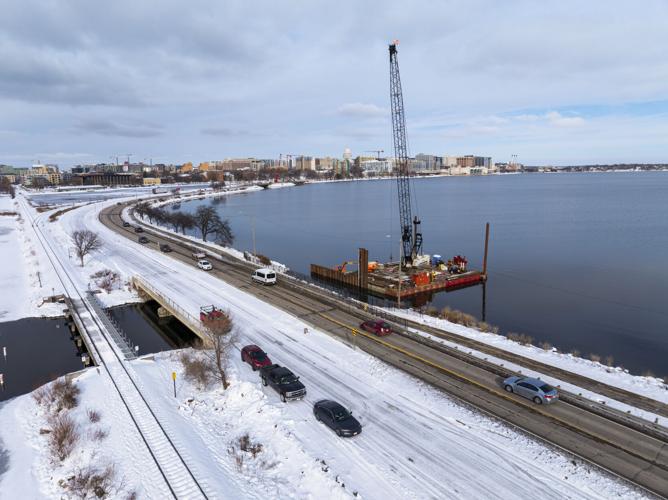

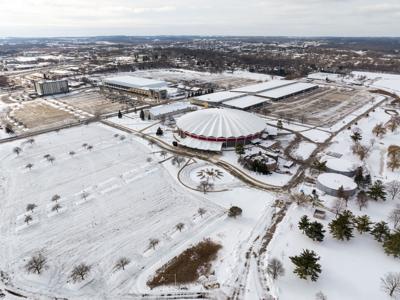
As Madison drivers adjust to a single lane of traffic along John Nolen Drive this winter, down the street toward the Beltline, developers and planners are imagining how to turn the area near the Alliant Energy Center into a pedestrian- and bike-friendly gateway to downtown — over the next 20 years or so.
The area around the Alliant Energy Center, a local convention center nestled between John Nolen and Rimrock Road, is zoned for parks and recreation for events like Brat Fest that bring people from the Dane County region and beyond to the isthmus downtown.
The reconstruction of John Nolen Drive is part of a larger vision to transform part of Madison’s south side into a vibrant, bustling waterfront walkway, complete with an updated entertainment campus.
To accomplish the goal, officials estimate hundreds of millions of dollars would be needed for several major development plans, including the reconstruction of John Nolen Drive, the Lake Monona Waterfront LakeWay Project, the city’s South Madison Area Plan and the Alliant Energy Center’s Master Plan.
The Alliant Master Plan was created in 2018 alongside a public-private task force formed to create a commercial “Destination District.” The county’s committee for the Alliant redevelopment, in collaboration with the Destination District task force, aims to redevelop the 164-acre parcel of Dane County land with new event space, stores, restaurants and potentially housing.
But some of the people working on the Alliant Energy Center transformation are concerned there's not enough coordination with all the other major project plans for south Madison, and not enough collaboration on how to best serve the neighborhoods and the people who live there. Some residents are worried about the developments, too.
Dave Davis, a 40-year neighbor of the event center, said he has been concerned about the campus’ future since the city began working on its South Madison Area Plan nearly four years ago. At the time, city planners weren’t considering the Alliant Energy Center’s redevelopment goals, which are overseen by Dane County. Residents have felt unheard during the process, he said.
“The Alliant Energy Center (feeds) into the Destination District, which connects to the Lakeway Project,” Davis said. “But no one’s talking about the combined impact of all of those three things, and how can we do planning when we can't talk about these huge projects that could have a huge impact on south Madison, including the Bay Creek (neighborhood).”
Davis worries city representatives don’t have enough say in the county’s Alliant Energy Center plans.
City Council Ald. Isadore Knox Jr. represents neighborhoods in south Madison from near Lake Waubesa along the Beltline toward Fish Hatchery Road, which includes the Alliant Energy Center. Knox is also a member of the county’s Redevelopment Committee, which meets regularly to discuss and plan the Alliant revamp and all its moving parts. Knox said he is confident in the plans for the region.
How to coordinate various plans for the Alliant has been an ongoing discussion, Knox said. The plans — rehabilitating the Veterans Memorial Coliseum, exhibition hall and parking lot that are all part of the Alliant property — are designed to be connected, he said, but funding needs and strategies for each project are vastly different.

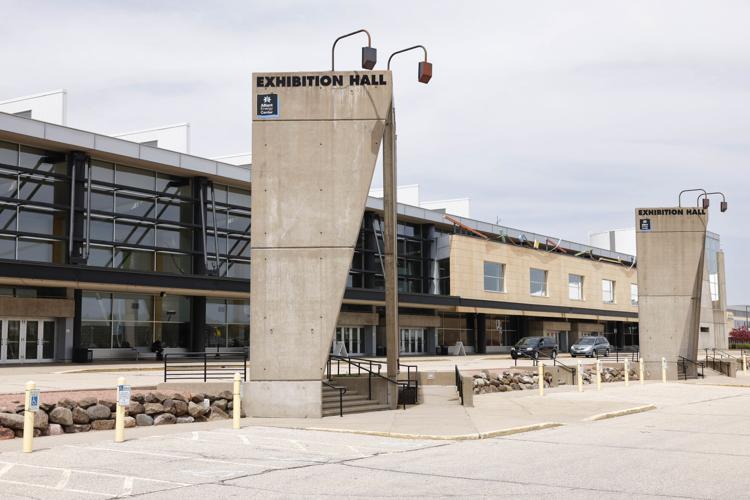
Plans for the Alliant Energy Center would rehabilitate the Exhibition Hall, parking lots, Veterans Memorial Coliseum and other parts of the 164-acre campus on Madison's south side.
Mayor Satya Rhodes-Conway’s capital budget and the city’s capital improvement plan propose keeping a redevelopment of South Park Street and West Badger Road on track, among other needs, including updating Fire Station 6 with a modern facility, creating a new public health clinic and funding more affordable housing. The 2026 capital budget includes $8.9 million for stormwater projects and flooding citywide, $5.3 million for sidewalk repair, and $25 million for the park system, which includes work on the south side.
Dane County Redevelopment Committee members this winter are reviewing applications to remodel and rebuild the Coliseum and preparing to see what developers have in mind if they were to build near the Alliant Energy Center, including potential mixed-use housing.
Before developers could apply for projects, the city would need to change the zoning options for the area, which residents have said lacks affordable housing choices.
Residents of south Madison told researchers in a 2022 survey they feared rent increases would drive up housing costs and push people out of their communities, making it hard to find adequate housing in the same neighborhood. University of Wisconsin-Madison Population Health researchers interviewed more than 200 residents, mostly renters, representing about 10% of households in the area. People of color reported being more burdened by housing costs than white residents.
Residents said they enjoyed the history of the community, how “homey” it felt, and the walking distance to amenities near South Park Street. They raised concerns about violence, drug use, property management, jobs and transportation access.
The study found residents wanted to get involved in development efforts but knew little about how to get engaged in city government. Most relied on community partners, like city-funded nonprofits and organizations, to stay informed.
Developers should build what the people in the community want, which includes better property management; clean, secure and affordable housing; and community centers with space for youth enrichment, said Jewel Adams, who works for the nonprofit Freedom Inc. to inform people about social service resources and who experienced her own housing struggles in south Madison. She worries that future development in south Madison could further gentrification and that property will be prioritized over people, echoing feedback shared during the community engagement phase of the 2022 Area Plan.
“(Developers) are not looking out for the community. They're looking more at the people. They would rather help remodel the community and make the community look good,” Adams said.
As community members advocate for development that serves and better reflects people of color — who represent most of south Madison’s residents — others hope their feedback about needs like stormwater management and housing affordability is heard by planners.

Jewel Adams at Freedom Inc. wants to see more community-centered buildout for the most vulnerable south Madison residents.
Alliant Energy Center redevelopment
The county’s Redevelopment Committee for the Alliant Energy Center campus overlaps in some ways with the group of public and private stakeholders on the Destination District Task Force. Both are focused on reviewing the planning designs and public improvement for the area and making recommendations.
Task Force members last month penned a letter to Alliant project leaders identifying their priorities for stitching together the vision of a “world-class, pedestrian-oriented district and celebrated community gateway for generations to come.”
They described wanting to ensure the Destination District feels cohesive from the South Park Street and West Badger Road area to downtown, without traffic getting in the way of pedestrian access. They also want to treat John Nolen Drive as a gateway and less of a barrier to the lakefront and the natural landscapes.
The Wingra Creek corridor should be treated as a “major conduit and destination” that links the Park Street corridor to the lakefront and to the Tenney Park and Vilas Park neighborhoods, all the way to the Alliant Energy Center, Task Force members wrote.
Davis, the nearby resident, said he looks forward to what the Alliant redevelopment could be — he imagines, for example, a rooftop brew pub — but is skeptical of city plans to overhaul his neighborhood and the larger south Madison area.
“What I saw as one of the shortcomings … was that the South Madison Plan was just described as the donut, with the Alliant Energy Center’s 164-acre campus being the hole in the donut. People were forbidden, basically, to talk about the Alliant Energy Center's redevelopment plans,” Davis said.
“Whether the (Alliant) plans are realistic or not, they were on the table, and they were looking at $300-400 million total to do everything they wanted to do, which to me would arguably be the biggest development that ever happened in south Madison. And the South Madison Plan was supposed to be looking at planning for development 20 years out,” Davis said.
The Alliant Energy Center’s current master plan outlines short-term goals that could be accomplished within a few years, such as updating the event parking and stormwater management, and longer-term plans like a new hotel, an updated arena, and a new Gateway Plaza with restaurants, entertainment and other amenities.
“It's got a lot of potential to do a lot of really cool things that would benefit, maybe not south Madison in particular, but Madison and the area,” Davis said.
“We ought to be looking at all this together so that we make sure it benefits the community, and in particular the neighborhoods closest to Capitol View, rather than being detrimental to those neighborhoods,” he said.

Other south side developments include Centro Hispano's new facility, the Urban League of Greater Madison's Black Business Hub and the Goodman South Public Library.
Davis is particularly interested in improved stormwater management. Flooding has damaged neighborhoods near the Alliant for years after a parking lot replaced a marsh, he said. Davis recalled Alliant Energy Center officials promising the parking lot wouldn’t be a problem and said he has been frustrated by their response.
The Alliant master plan aims to improve parking options and stormwater management in the future by potentially using the natural resources on the campus, such as Willow Island.
Dane County Board member Chuck Erickson, who represents part of the Alliant campus, said the moving parts of the center’s master plan could be viewed as “chaotic,” but communication within the Destination District Task Force is helping to keep people informed about project updates and redevelopment goals at the early stages.
Addressing stormwater management is a key priority, Erickson said, along with improved accessibility, traffic engineering and pedestrian safety, a similar concern shared by residents in the City Council’s District 13 near South Park Street.
“Somebody brought up concerns about all the development that’s happening in the isthmus, and of course, they went straight into parking. But, I mean, that’s a concern that people always have — if we're doing all this development, how much is it going to lead to issues like street parking,” Erickson said.
“It would be nice someday to have another hotel on the site somewhere, and have some other amenities. By that, I mean a coffee shop or restaurant or whatever, literally on site. But part of that is pedestrian issues,” Erickson said.
Within biking distance, longstanding parts of South Park Street are being redeveloped as part of the South Madison Plan, signaling a turning point in the neighborhood’s diminishing identity and redefining the boundary between gentrification and redevelopment.
Gentrification leads to wealthier people moving into an area that previously was home to lower-income people, Ald. Tag Evers said in an email to the Cap Times. Development of new housing accompanied by new public amenities like city parks can stimulate demand, resulting in increased housing values, he said.
“The city is cognizant of this dynamic, which is why we’ve stepped up our investments in south Madison via our land banking efforts,” Evers said. “Land banking removes parcels from the whirlwind of the speculative real estate market and allows for projects piloted by the Community Development Authority, like the one planned at the intersection at Park Street and Badger Road.”

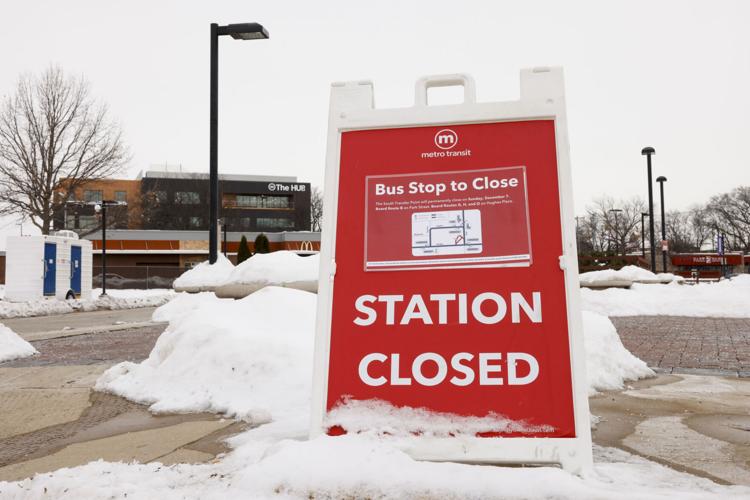
Metro Transit's South Transfer Point near West Badger Road is included in the city's plans to prioritize future development.
What should redevelopment in south Madison look like?
Next year’s city capital improvement plan describes the 10-year plan for the Triangle redevelopment — in the neighborhood bordered by West Washington Avenue, South Park Street and Regent Street — as “ambitious” and boasts 1,200 new apartments in eight years, without displacing a single resident.
“This housing is designed to highlight the importance of community, foster strong connections to the rest of downtown, and save renters money on their utility bills by using sustainable building methods,” the document reads.
A common thread among south Madison residents — besides the desire not to be priced or pushed out of their neighborhoods — is the wish to be involved in the development process.
In the November letter, members of the Destination District Task Force said the final product should feel cohesive from downtown to South Park Street and West Badger Road.
The city’s current area plan to “build community wealth” and “create opportunities to thrive” in south Madison was adopted by the City Council in 2022. The plan is eighth in line out of 12 other area plans and will be revisited after the city works on developing the north side of Madison.
Asked whether he thinks the planned community and economic development in District 13 is meeting the needs of the community, Evers said “it depends.”
“There are those who mostly want things to stay the same, who oppose increased density and infill. (Others) agree that opposing density means increasing sprawl, which few favor,” Evers said. “We can’t put a moat around the city and put up signs telling folks not to come. Again, we are the fastest growing city in the state and our cityscape is necessarily changing as a result.”
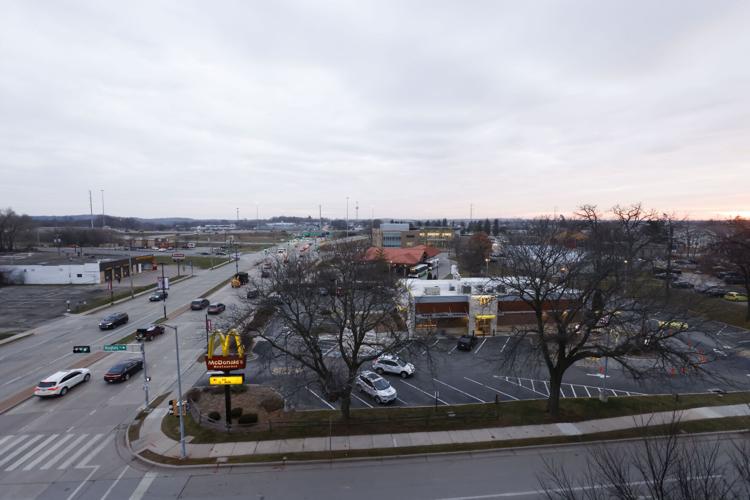
City plans prioritize future development for areas like South Park Street and West Badger Road, near Metro Transit’s South Transfer Point. The plans also acknowledge the need for more neighborhood-informed development, affordable housing options and resources to support self-sufficiency.
Most development in recent years on Madison’s south side has taken place in that neighborhood, such as a child care facility at Madison College and the nearly completed Center for Black Excellence and Culture. Other developments include Centro Hispano’s new facility, the Urban League of Greater Madison’s Black Business Hub and the Goodman South Public Library.
Adams at Freedom Inc. wants to see more community-centered buildout for the most vulnerable south Madison residents.
“It’s all the same little circle that use that Hub for those small business owners. But how is that benefiting our community? How is it benefiting our low- to no-income community members? How is that benefiting our homeless members in the community?” Adams said. “It’s not.”
Adams, in her mid-60s, said she has experienced challenges navigating housing insecurity and looking for affordable housing, especially as a Black, single mother. While raising her daughters on the south side, she said, she waited for more than a decade before obtaining affordable housing through Madison’s Community Development Authority.
Rent increases, several months living with a chipmunk infestation, and inadequate property management eventually forced her out of her south Madison home, she said. Adams moved to the city’s east side with her family two years ago.
She emphasized the need for community development that prioritizes the needs of low-income residents, including affordable housing and resources for homeless individuals.
The best example of community-centered housing for Adams was a property manager who owned several apartment complexes on the south side offering affordable rent based on income. Then, upon the property manager selling the building, he offered each tenant several thousand dollars, which helped Adams pay for eight months of rent at her next apartment.

The vision to upgrade the Alliant Energy Center began in 2018, alongside several other projects to turn John Nolen Drive into a booming pedestrian gateway to downtown.
Some developments in south Madison, such as the Bayview Community and Triangle redevelopment, have restored faith in affordable housing, Evers said.
“We’ve witnessed the very impressive redevelopment of Bayview, and construction is underway for the CDA housing on the Triangle. The VFW site was redeveloped along John Nolen and work has started on the reconstruction of that corridor, dovetailing with Madison LakeWay. Lots of good things (are) going on in District 13,” he said.
“We’ve seen three housing projects along South Park, including 150 units of affordable housing at the former Truman Olson site, with at least two new projects along South Park in the works. We have a new 5-story project going up on Regent Street with growing interest in that corridor,” he added.
One long-term goal of the Alliant Energy Center Redevelopment Plan is to create 1,400 full-time jobs over 30 years. But that’s dependent on which businesses are interested in building in south Madison, or if they can coordinate development plans.
Part of the vision to make south Madison a “Destination District” is to bring amenities — such as grocery stores, restaurants, parks and entertainment — closer together. A city-owned building on South Park Street is now under construction to install the proper ventilation needed for a grocery store, Maurer’s Market.
Melani Quarles, an older woman of color, grew up on the south side before leaving the city and returning years later to Madison’s east side. South Madison used to be a safe, tight-knit community where everyone looked out for each other, she said. The neighborhood also used to feature more community development centered on young people, Quarles said.
“Open up a community center where kids can hang out instead of being out on the streets doing stuff they shouldn't be doing. Give them something that they like,” Quarles said. “Kids love playing basketball. They love playing sports. Give them that opportunity. Make it affordable.”
“When we were coming up, the South Madison Neighborhood Center was free,” she added. “They would have cooking classes there for us. We would go there after school and play basketball and pool. I mean, that was the neighborhood hangout.”
Knox, the City Council member who represents part of the south side, echoed Quarles’ sentiment about neighborhood identity and youth centers. Knox said he wants to increase opportunities for residents to advocate for their neighborhoods before developers break ground.
He also wants to continue working toward diversifying the types of housing available to his constituents, regardless of whether they’re looking to rent, move into a bigger home, downsize or age in place.
“We need to plan for different types of housing, not only just single-family housing, but affordable housing, maybe owner-occupied townhouses. This is kind of what we’ve been talking about forever, because we don't want the neighborhood to be totally gentrified and then turn into a high-rise on Park Street,” Knox said.
Photo credit: The aerial picture of the Alliant Energy Center at the top of this story was taken by OVJ Photography.


